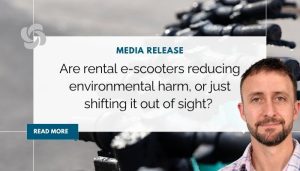
Joe Hayes is a strategically-minded and practical environmental professional who brings over two decades of experience in consulting, resources, and public sectors.
Joe worked as a contaminated land professional in the United States and Australia, and has served in both regulatory and consulting capacities on an array of contamination assessment and remediation projects. He also has extensive experience in upstream oil and gas, including previous roles as an environmental lead for a major upstream gas project, and as a consultant providing specialist support to exploration, project, and operations teams for several major clients. One of Joe’s strengths is his ability to apply his practical knowledge of upstream infrastructure and operations to derive operationally pragmatic solutions, while also meeting environmental regulations and technical requirements.
Some of Joe’s recent work includes projects in the areas of site rehabilitation and remediation, beneficial re-use of produced water, beneficial re-use of drill cuttings, groundwater and hydraulic stimulation risk assessments, and monitoring program optimization.
What do you find most rewarding about the work that you do?
What I find most rewarding is seeing meaningful improvement take hold in a practical and enduring way. I’m naturally drawn to process and efficiency – identifying where something can work better and helping to develop and implement the solution. I also value the process of starting with a problem, working through investigation and planning, and successfully implementing a solution. It is particularly gratifying when the result is a highly tangible environmental outcome, such as the remediation or rehabilitation of a site.
What are you currently working on?
Most of my work is in the oil and gas sector and is quite varied, ranging from operational improvement initiatives through to contamination investigation and rehabilitation. There are two projects that I’m focused on at the moment that reflect my breadth of work.
The first project involves an assessment of water discharges from low-point drains, which are a series of drainage points installed on gas pipelines used to purge condensed water that accumulates in the lines. The study involves review of upstream engineering and operational controls, analysis of water quality and volumes, assessment of potential environmental risks and impacts, and development of monitoring and management measures. The goal of the project is to improve the efficiency and practicality of water management in the field while ensuring environmental protection.
The second project involves the assessment of potential gas migration in the shallow sub-surface and the risk of surface expression. This work combines broad-scale gas flux monitoring to quantify gas migration rates with geophysical investigations and soil bore assessments to characterize sub-surface lithology, geometry, gas occurrence, and potential migration pathways. The outcome will result in a more clarified understanding of risk and provide a sound technical basis for remediation system design, if required.
How can our clients benefit from this service/particular innovation?
Studies like the low-point drain study support operational improvement and efficiency while maintaining compliance and good environmental practice. In this case, the project will result in smarter water management practices, reducing the time that field operators will spend managing and transporting water (i.e., freeing them up to spend more time on their primary duties of system monitoring and maintenance), while ensuring a sufficient level of environmental protection.
The shallow sub-surface gas assessment will clarify what is considered a complex risk. By quantifying water migration rates and understanding sub-surface migration pathways, our client will be better positioned to implement effective management measures that are proportionate to the level of risk.
What is a little-known fact about you?
Woodworking has long been an interest of mine. Earlier in my career, I worked in a shop making high-end custom furniture, and I still enjoy designing and making my own pieces. For a time, I also built guitars but purely as a hobby – one of my goals is to start doing that again.